ExpertScientist
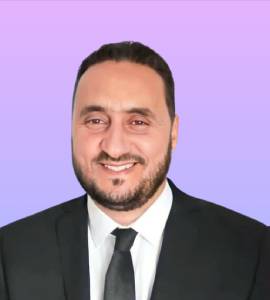
Pr Khaled Charradi
Senior Expert in Hydrogen and Energy Storage
Khaled Charradi specialises in hydrogen and energy storage.
View details
BECOME / CLEAN ENERGY
Evaluate energy technologies through the application, resources and operating conditions they must serve.
Discuss an energy projectClean energy projects bring together scientific performance, infrastructure, demand and practical delivery constraints. BECOME’s focus on clean energy and hydrogen creates a route for discussing these issues with researchers, industrial partners and programme stakeholders.
Start with the energy need, the existing system and the outcome to be assessed. The relevant question may concern production, storage, conversion or the relationship between several components.
A feasibility assessment can identify what is known, what remains uncertain and what evidence is needed next. Demonstrators and pilots should have an agreed test scope and appropriate specialist oversight.
Advanced materials can inform performance and durability questions. Data & AI can support analysis and monitoring. Water and circularity bring additional resource considerations into project design.
Tell us about the application, the maturity of the work and the contribution you are seeking. We can explore whether a research collaboration, a consortium or an applied programme is the appropriate next step.
3 records
Senior Expert in Hydrogen and Energy Storage
Khaled Charradi specialises in hydrogen and energy storage.
View detailsPhD in Physics
Sahbi Hamrouni holds a PhD in Physics.
View details
PhD in Electrical Engineering
Mohamed Khayri Rahmani holds a PhD in Electrical Engineering and researches AI-driven energy efficiency and intelligent control.
View details19 records
Alternative proton exchange membranes (PEMs) with high proton conductivity must be fabricated at reasonable costs to qualify as commercially used proton-exchange membrane fuel cells (PEMFCs).
View detailsChitosan (CS) is a naturally occurring biopolymer that is readily accessible and widely used in various industrial applications. However, its low proton conductivity, particularly at elevated temperatures, poses challenges for its application as a proton exchange…
View detailsSulfonated poly (ether ether ketone) (SPEEK) has received substantial attention for its potential to improve the electrochemical behavior and thermomechanical capabilities of direct methanol fuel cells. This study examines how the integration by solution casting of…
View detailsThis study investigated the potential enhancement of proton conductivity in Nafion membranes through the incorporation of sulfo ethyl cellulose (SEC) at varying weight ratios (5 and 10 wt.%). Results indicated that increasing the weight ratio of…
View detailsAn interesting approach was employed to fabricate ion exchange membranes tailored for proton exchange membrane applications. This involved blending low sulfonated polyether sulfone octyl sulfonamide (LSPSO) with Layered Double Hydroxides (LDHs) clay at varying weight ratios…
View detailsLow-sulfonation-level polyether sulfone octyl sulfonamide (LSPSO) was blended with a layered double hydroxides (LDHs, Mg2AlCl)/sepiolite nanostructure clay as a fller to create an electrolyte membrane for fuel cell applications. Comprehensive characterization of the composite membranes was…
View detailsAn innovative methodology was employed to fabricate ion exchange membranes tailored for fuel cell applications. This approach entailed blending low sulfonated polyether sulfone octyl sulfonamide (LSPSO) with Hectorite (Hect) clay at varying weight percentages (1 wt%,…
View detailsComposite membranes comprising sulfonated poly (ether ether ketone) (SPEEK) blended with varying proportions of sulfoethyl cellulose (SEC) at 5 wt% and 10 wt% were fabricated for fuel cell application. The structural, morphological, and thermal properties of…
View detailsIn porous media, heat and mass transfer is a classical model of transport and it is one of the most energy-intensive industrial processes with a wide variety of applications. This present paper is developed in order…
View details2 records
Research into bio-based membranes and catalysts for proton exchange membrane fuel cells and green hydrogen electrolyzers.
View detailsBIO-MICRO-GRADE is a European collaborative research proposal focused on developing a new generation of sustainable, bio-derived materials for solid-state energy storage.
View detailsBring a challenge, a contribution or an opportunity.