ExpertScientist
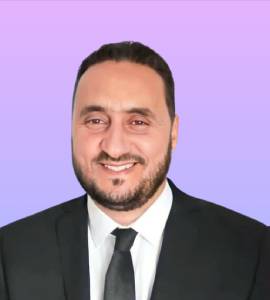
Pr Khaled Charradi
Senior Expert in Hydrogen and Energy Storage
Khaled Charradi specialises in hydrogen and energy storage.
View details
An innovative methodology was employed to fabricate ion exchange membranes tailored for fuel cell applications. This approach entailed blending low sulfonated polyether sulfone octyl sulfonamide (LSPSO) with Hectorite (Hect) clay at varying weight percentages (1 wt%, 3 wt%, and 6 wt%). The resultant composite membranes underwent comprehensive characterization via Fourier transform infrared spectroscopy, X-ray difraction, scanning electron microscopy, and thermogravimetric analysis, aiming to assess their surface morphology and thermal resilience. Remarkably, the thermal stability of the composite membrane exhibited a substantial enhancement in comparison to the pristine LSPSO membrane. Moreover, the incorporation of 6 wt% Hectorite into the composite membrane yielded a noteworthy amplifcation in proton conductivity, achieving a fourfold increase (141.66 mS/cm) as opposed to the LSPSO membrane in isolation (35.04 mS/cm).
Walid Mabrouk
Khaled Charradi
Imen Ben Kacem
Ridha Lafi
Nizar Bellakhal
Riadh Marzouki
Sherif M. A. S. Keshk
An innovative methodology was employed to fabricate ion exchange membranes tailored for fuel cell applications. This approach entailed blending low sulfonated polyether sulfone octyl sulfonamide (LSPSO) with Hectorite (Hect) clay at varying weight percentages (1 wt%, 3 wt%, and 6 wt%). The resultant composite membranes underwent comprehensive characterization via Fourier transform infrared spectroscopy, X-ray difraction, scanning electron microscopy, and thermogravimetric analysis, aiming to assess their surface morphology and thermal resilience. Remarkably, the thermal stability of the composite membrane exhibited a substantial enhancement in comparison to the pristine LSPSO membrane. Moreover, the incorporation of 6 wt% Hectorite into the composite membrane yielded a noteworthy amplifcation in proton conductivity, achieving a fourfold increase (141.66 mS/cm) as opposed to the LSPSO membrane in isolation (35.04 mS/cm).
Walid Mabrouk; Khaled Charradi; Imen Ben Kacem; Ridha Lafi; Nizar Bellakhal; Riadh Marzouki; Sherif M. A. S. Keshk. 2024-02-16. Significant augmentation of proton conductivity in low sulfonated polyether sulfone octyl sulfonamide membranes through the incorporation of hectorite clay. Materials for Renewable and Sustainable Energy. 69-79. https://doi.org/10.1007/s40243-023-00251-6
Senior Expert in Hydrogen and Energy Storage
Khaled Charradi specialises in hydrogen and energy storage.
View details
Senior Researcher in Polymer Materials, Nanocomposites and Sustainable Materials Engineering
Sherif Keshk specialises in polymer materials, nanocomposites and sustainable materials engineering.
View detailsSenior Researcher in Polymer Materials, Nanocomposites and Sustainable Materials Engineering
Sherif Keshk specialises in polymer materials, nanocomposites and sustainable materials engineering.
View detailsSenior Expert in Hydrogen and Energy Storage
Khaled Charradi specialises in hydrogen and energy storage.
View details