SuN4Med
SuN4Med is a Mediterranean collaborative research project dedicated to developing a new generation of sustainable, biodegradable, and antimicrobial food packaging and coatings.
View details
BECOME / FOOD SCIENCE
BECOME’s Food Science & Sustainable Agri-Food Systems domain connects materials research, green chemistry and digital methods with food-related challenges. Its focus includes sustainable packaging, natural active agents and the valorisation of agricultural byproducts.
Discuss a food-system challengeBECOME advances research and innovation in sustainable food systems by combining food science, advanced materials, green chemistry, Artificial Intelligence and circular economy approaches.
Its research interests include transforming agro-industrial byproducts into functional materials, developing biodegradable and antimicrobial food packaging, and applying digital technologies to improve material classification, processing and quality.
Through international research collaborations, BECOME aims to translate scientific results into scalable technologies that support food safety, waste reduction and more sustainable agri-food value chains.
A research project starts with the food product, packaging function or byproduct stream to be investigated. Define the intended users, processing conditions, available materials and baseline before selecting a technology. Agree how food safety, material performance, resource use and potential scale-up will be evaluated.
Potential investigations include extracting and characterising bio-based polymers, assessing natural antimicrobial agents and studying the mechanical and barrier properties of packaging materials. Laboratory evidence should describe the methods, comparison materials and limitations of each result.
AI and computer vision can be explored for feedstock classification and quality assessment where suitable data is available. Any proposed food-contact application requires validation appropriate to its intended use; research-stage performance alone does not establish market readiness.
Advanced Materials & Nanotechnology connects biopolymers and composite design with material characterisation. Responsible AI & Scientific Computing provides a route to exploring classification and data analysis. Water, Climate & Circular Systems connects byproduct valorisation with resource use and environmental questions.
Research can explore potential applications in sustainable packaging, food safety and circular agri-food systems. BECOME develops research and innovation approaches that can contribute to sustainable agri-food systems, food safety, circular resource use and measurable development outcomes.
Mediterranean agri-food research brings together different crops, production conditions and industrial needs. Collaboration can begin by identifying locally available byproducts, scientific partners, potential users and the evidence needed to assess a proposed application.
SuN4Med provides a PRIMA research context for sustainable food packaging and coatings. Further opportunities can be scoped through International Cooperation, with responsibilities, resources and expected outcomes defined for each project.
SuN4Med is a Mediterranean collaborative research project dedicated to developing a new generation of sustainable, biodegradable, and antimicrobial food packaging and coatings.
View detailsThis work examined the effects of four plasticizers, glycerol (GLY), potassium phosphate (PHOS), polyethylene glycol (PEG), and soy lecithin (SL), on the structural, surface, thermal, optical, and mechanical properties of polyhydroxybutyrate (PHB) films. FTIR spectra demonstrated…
View details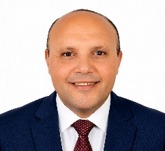
Senior Researcher in Polymer Materials, Nanocomposites and Sustainable Materials Engineering
Sherif Keshk specialises in polymer materials, nanocomposites and sustainable materials engineering.
View details
Senior Expert in Hydrogen and Energy Storage
Khaled Charradi specialises in hydrogen and energy storage.
View detailsBring a challenge, a contribution or an opportunity.