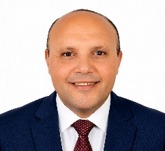
Senior Researcher in Polymer Materials, Nanocomposites and Sustainable Materials Engineering
ExpertScientist
Dr. Sherif M. A. S. Keshk is a professor of chemistry and an internationally acclaimed expert in polymer science, biopolymers, and sustainable materials innovation. He earned his D.Eng. in Industrial Chemistry from Tokyo Metropolitan University (Japan) and completed advanced postdoctoral training through JSPS Fellowships. His research spans biopolymer composites, nanostructured materials for renewable energy, optoelectronic systems, and circular‑economy technologies, with a strong emphasis on translating academic research into industrial solutions.
Dr. Keshk has held professorial appointments at Ain Shams University (Egypt), King Khalid University (Saudi Arabia), and the University of Sfax (Tunisia), where he served until 2024. Beginning in 2026, he joins the Center for Research and Technology of Energy (CRTEn, Tunisia) as Professor of Applied Polymer Chemistry.
He currently serves as a Senior Expert at the BECOME Board Institute (France) since 2023, an Advisory Member at Chitelix (Tunisia), and a Senior Expert affiliated with the EUREKA Public Network for International Cooperation in R&D and Innovation (Belgium).
He has supervised more than 25 Ph.D. and 15 M.Sc. researchers across Egypt, Japan, Saudi Arabia, and Tunisia, and has authored over 150 peer‑reviewed publications in high‑impact international journals. He has consistently ranked among the Top 2% of global scientists (Stanford University database, 2020–2025), reflecting his sustained scientific influence and global visibility. His distinctions include the Best Project Award (2015) from King Abdulaziz City for Science and Technology and the Best Researcher Award (2009) from Ain Shams University.
Dr. Keshk has led and co‑developed more than 20 major international research projects in collaboration with institutions such as USA–Egypt Cooperation, Toyota, JSPS Japan, Kochi University, King Khalid University, and KACST Saudi Arabia. His Polymer Chemistry Group develops advanced biopolymer membranes for fuel cells, sustainable packaging systems, and smart functional materials, contributing to both academic advancement and industrial transformation.
In addition to his scientific achievements, Dr. Keshk plays a significant role in the global publishing community. He serves as an Editorial Board Member for Materials for Renewable and Sustainable Energy (Springer Nature) and as an Associate Editor for Emergent Materials (Springer Nature), where he oversees peer review, evaluates manuscripts, and helps shape the scientific direction of research in advanced and sustainable materials.
Related expertise
Publications
26 records
Research article
2024-05-04 · Journal of Applied Polymer Science
Khaled Charradi; Zoubaida Landolsi; Thomas Heinze; et al.
This study investigated the potential enhancement of proton conductivity in Nafion membranes through the incorporation of sulfo ethyl cellulose (SEC) at varying weight ratios (5 and 10 wt.%). Results indicated that increasing the weight ratio of…
View details ↗Research article
2024-04 · Materials Chemistry and Physics
Imen Ben Kacem; Walid Mabrouk; Khaled Charradi; et al.
An interesting approach was employed to fabricate ion exchange membranes tailored for proton exchange membrane applications. This involved blending low sulfonated polyether sulfone octyl sulfonamide (LSPSO) with Layered Double Hydroxides (LDHs) clay at varying weight ratios…
View details ↗Research article
2024-03-01 · Materials for Renewable and Sustainable Energy
khaled Charradi; Walid Mabrouk; Imen Ben Kacem; et al.
Low-sulfonation-level polyether sulfone octyl sulfonamide (LSPSO) was blended with a layered double hydroxides (LDHs, Mg2AlCl)/sepiolite nanostructure clay as a fller to create an electrolyte membrane for fuel cell applications. Comprehensive characterization of the composite membranes was…
View details ↗Research article
2024-02-16 · Materials for Renewable and Sustainable Energy
Walid Mabrouk; Khaled Charradi; Imen Ben Kacem; et al.
An innovative methodology was employed to fabricate ion exchange membranes tailored for fuel cell applications. This approach entailed blending low sulfonated polyether sulfone octyl sulfonamide (LSPSO) with Hectorite (Hect) clay at varying weight percentages (1 wt%,…
View details ↗Research article
2023-12 · International Journal of Biological Macromolecules
Manel Chalghaf; Khaled Charradi; Riadh Ksouri; et al.
Chitin present in the shell of edible insects is a potential source of chitin, lipids, and proteins, and it exerts various biological activities. Thus far, only a few studies have focused on the use of chitin…
View details ↗Research article
2023-08-16 · ChemistrySelect
Amira Siai; Alfonso Policicchio; Abdullah Y. A. Alzahrani; et al.
The increasing concentration of carbon dioxide in the atmosphere poses significant challenges for its capture. Carbon dioxide emissions contribute substantially to the greenhouse effect, leading to detrimental effects on ecosystems and drastic climate change. In this…
View details ↗Research article
2023-08-14 · Journal of Solid State Electrochemistry
Khaled Charradi; Zoubaida Landolsi; Lars Gabriel; et al.
Composite membranes comprising sulfonated poly (ether ether ketone) (SPEEK) blended with varying proportions of sulfoethyl cellulose (SEC) at 5 wt% and 10 wt% were fabricated for fuel cell application. The structural, morphological, and thermal properties of…
View details ↗Research article
2023-08 · Royal Society Open Science
Sabrine Baachaoui; Walid Mabrouk; Khaled Charradi; et al.
The development of cost-effective materials for fabricating electrodes is crucial for drug, pharmaceutical and environmental applications. This paper presents the synthesis and characterization of a novel polyketimine (PKI) membrane obtained by condensing partially of different weight…
View details ↗